
Electrical / electronic Testing

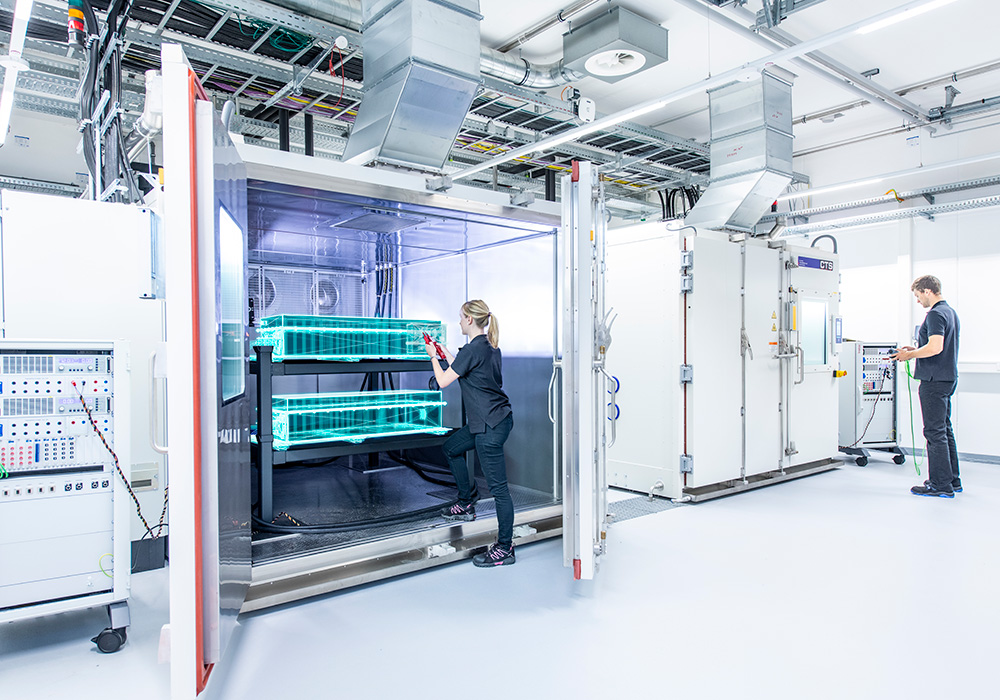
With the increasing number of assistance systems in vehicles, the number of E/E components is also growing. Reliability is a key aspect here. Rapid developments in the field of driver assistance systems and increasing levels of connectivity are increasing the number of E/E components used in vehicles. Thanks to its in-depth product knowledge, innovative testing technologies, and extensive testing resources, Bertrandt is your ideal partner for testing your e-mobility solution.

Test control and monitoring

As a full-service partner, we provide support in the control of E/E components. With our own test systems, which use various communication channels such as CAN, LIN, and PWM, we are quickly ready for action. These systems are equipped with measuring equipment for electrical variables and for evaluating measured values. We use preprogrammed test catalogs for common standards and can also implement special test requirements.

Electrical, climatic, and mechanical requirements

We simulate influencing factors such as voltage drops, reverse polarity, and cable damage. During climatic tests, we monitor key parameters of the components. Mechanical requirements such as shocks during the life cycle are simulated realistically, and the test benches are designed to ensure the reliability of the E/E components.

Browse through our services and order your tests directly online!

Conducted emissions CISPR25

The test measures the conducted emissions of a vehicle component. The aim of this is to ensure that the component under test does not interfere with other electronic devices or systems. External Test

DAQ - Mobile Data Acquisition System CE

The mobile DAQ system (data acquisition system) was designed to acquire measurement data from mid-range radars, short-range radars and multifunction cameras in vehicle protection. It is used in vehicle-specific investigations to safeguard driver assistance systems. The system processes data based on the CAN/CANFD and Ethernet bus protocols and stores it directly on the built-in measuring computer including memory extension. Due to its design, the system can not only be used for the protection of driver assistance systems, but also offers the possibility of recording data for any components or functions with CAN or ETH communication. A prerequisite for use is the preparation of the test vehicle with bus taps and a power supply.The system works as standard in the Vector tool chain with Vector VN boxes (CAN/ETH controller) and the Vector CANape software on the built-in brick computer, which was specially designed by the manufacturer for use in the vehicle. The mobile measuring system can be installed directly in the test vehicle and enables measurements under real conditions. To record data, the test vehicle must have access to the desired bus network. The recorded data is used to objectively evaluate, validate and optimize the driver assistance systems or other components and functions. The DAQ system provides real-time visualizations and enables both immediate and retrospective data analysis. It thus supports the entire development process of vehicle assistance systems, from the concept phase to final tuning, and makes a significant contribution to improving the safety and reliability of the systems and subsystems to be safeguarded. Please note the information in the enclosed operating instructions. Key competencies: CAN/ETH measurement data acquisitionBuffer battery: realization of measurements across terminal changes - short-term autonomous operation possibleVoltage management with warnings and display of the charge status of the installed backup batterySeparate power supply unit and measuring unit (separate ON/OFF switches)Patch panel: CAN/ETH data taps, power supply for external consumers via banana socketsCE certification: Compliance with EU environmental, health and safety requirementsEmergency stop button Vehicle requirements: Taps for CAN/ETH bus communicationPower supply

E-01 Long-term overvoltages VW 80000

This test tests the behavior of electrical and electronic components in motor vehicles under prolonged overvoltage. The component to be tested is exposed to a higher voltage than the normal operating voltage for a defined period of time. The aim is to ensure that the component functions reliably and without damage even in the event of prolonged overvoltage conditions, such as those that can occur due to faults in the charging system.

E-01 Long-term overvoltages GS 95024-2

This test tests the behavior of electrical and electronic components in motor vehicles under prolonged overvoltage. The component to be tested is exposed to a higher voltage than the normal operating voltage for a defined period of time. The aim is to ensure that the component functions reliably and without damage even in the event of prolonged overvoltage conditions, such as those that can occur due to faults in the charging system.

E-01 Long-term overvoltages MBN LV 124-2

This test tests the behavior of electrical and electronic components in motor vehicles under prolonged overvoltage. The component to be tested is exposed to a higher voltage than the normal operating voltage for a defined period of time. The aim is to ensure that the component functions reliably and without damage even in the event of prolonged overvoltage conditions, such as those that can occur due to faults in the charging system.

E-02 Transient overvoltages VW 80000

Test to evaluate the behavior of electrical and electronic components in motor vehicles in the event of short-term overvoltages. The component to be tested is exposed to brief voltage peaks that exceed the normal operating voltage. The aim is to ensure that the component functions reliably and without damage even in the event of short-term overvoltages, as can occur during vehicle operation.

E-02 Transient overvoltages GS 95024-2

Test to evaluate the behavior of electrical and electronic components in motor vehicles in the event of short-term overvoltages. The component to be tested is exposed to brief voltage peaks that exceed the normal operating voltage. The aim is to ensure that the component functions reliably and without damage even in the event of short-term overvoltages, as can occur during vehicle operation.

E-02 Transient overvoltages MBN LV 124-2

Test to evaluate the behavior of electrical and electronic components in motor vehicles in the event of short-term overvoltages. The component to be tested is exposed to brief voltage peaks that exceed the normal operating voltage. The aim is to ensure that the component functions reliably and without damage even in the event of short-term overvoltages, as can occur during vehicle operation.

E-03 Transient undervoltage VW 80000

The test simulates transient undervoltages in a vehicle's electrical system that can occur when loads are switched. The aim is to ensure that the component to be tested works reliably and without functional restrictions even in the event of short-term undervoltage, as can occur during vehicle operation

E-03 Transient undervoltage GS 95024-2

The test simulates transient undervoltages in a vehicle's electrical system that can occur when loads are switched. The aim is to ensure that the component to be tested works reliably and without functional restrictions even in the event of short-term undervoltage, as can occur during vehicle operation

E-03 Transient undervoltage MBN LV 124-2

The test simulates transient undervoltages in a vehicle's electrical system that can occur when loads are switched. The aim is to ensure that the component to be tested works reliably and without functional restrictions even in the event of short-term undervoltage, as can occur during vehicle operation

E-04 Jumpstart VW 80000

This test simulates the external supply of a vehicle and takes into account the increased vehicle electrical system voltages that can occur in commercial vehicle systems. The maximum test voltage is set accordingly to ensure the reliability and safety of the vehicle.

E-04 Jumpstart GS 95024-2

This test simulates the external supply of a vehicle and takes into account the increased vehicle electrical system voltages that can occur in commercial vehicle systems. The maximum test voltage is set accordingly to ensure the reliability and safety of the vehicle.

E-04 Jumpstart MBN LV 124-2

This test simulates the external supply of a vehicle and takes into account the increased vehicle electrical system voltages that can occur in commercial vehicle systems. The maximum test voltage is set accordingly to ensure the reliability and safety of the vehicle.

E-05 Load Dump VW 80000

The test simulates a load dump that can occur when a large load drops in a vehicle's electrical system. The aim is to ensure that the component to be tested functions without damage and that no malfunctions occur, even in the event of extreme voltage peaks such as those that can occur as a result of a load dump.

E-05 Load Dump GS 95024-2

The test simulates a load dump that can occur when a large load drops in a vehicle's electrical system. The aim is to ensure that the component to be tested functions without damage and that no malfunctions occur, even in the event of extreme voltage peaks such as those that can occur as a result of a load dump.

E-05 Load Dump MBN LV 124-2

The test simulates a load dump that can occur when a large load drops in a vehicle's electrical system. The aim is to ensure that the component to be tested functions without damage and that no malfunctions occur, even in the event of extreme voltage peaks such as those that can occur as a result of a load dump.

E-06 Superimposed alternating voltage VW 80000

The test simulates superimposed AC voltages in a vehicle's electrical system. The aim is to ensure that the component to be tested works reliably and without functional restrictions even with superimposed AC voltages, as can occur in the vehicle electrical system.

E-06 Superimposed alternating voltage GS 95024-2

The test simulates superimposed AC voltages in a vehicle's electrical system. The aim is to ensure that the component to be tested works reliably and without functional restrictions even with superimposed AC voltages, as can occur in the vehicle electrical system.

E-06 Superimposed alternating voltage MBN LV 124-2

The test simulates superimposed AC voltages in a vehicle's electrical system. The aim is to ensure that the component to be tested works reliably and without functional restrictions even with superimposed AC voltages, as can occur in the vehicle electrical system.

E-07 Slow decrease and increase of the supply voltage VW 80000

The test simulates the slow lowering and raising of the supply voltage in a vehicle's electrical system, such as during slow discharging and charging processes of the vehicle battery. The aim is to ensure that the component to be tested works reliably and without functional restrictions even with slow voltage fluctuations.

E-07 Slow decrease and increase of the supply voltage GS 95024-2

The test simulates the slow lowering and raising of the supply voltage in a vehicle's electrical system, such as during slow discharging and charging processes of the vehicle battery. The aim is to ensure that the component to be tested works reliably and without functional restrictions even with slow voltage fluctuations.

E-07 Slow decrease and increase of the supply voltage MBN LV 124-2

The test simulates the slow lowering and raising of the supply voltage in a vehicle's electrical system, such as during slow discharging and charging processes of the vehicle battery. The aim is to ensure that the component to be tested works reliably and without functional restrictions even with slow voltage fluctuations.

E-08 Slow decrease, quick increase of the supply voltage VW 80000

The test simulates the slow drop of the battery voltage to 0 V and the subsequent rapid rise of the supply voltage, such as when an external starting source is applied.

Contact us

Do you have any questions? We will be happy to advise you personally:

To the contact form

Contact
Service not listed? Contact us!