
Vehicle Safety

Vehicle Safety

We offer comprehensive functional and sensory testing for occupant and passenger protection in the field of vehicle safety in the automotive sector and in other mobility sectors. With our accredited test labs, we ensure the effectiveness of passive safety systems and components for body and interior. With a wide range of static, quasi-static and dynamic test solutions, we are flexible, efficient and fast, even for large volumes.

Passive safety systems

We test airbags, seatbelts, seats, structure and sensors according to international standards, regulations, consumer protection specifications and OEM-specific requirements. State-of-the-art measurement and camera technology on our test benches enables verification of current development statuses.


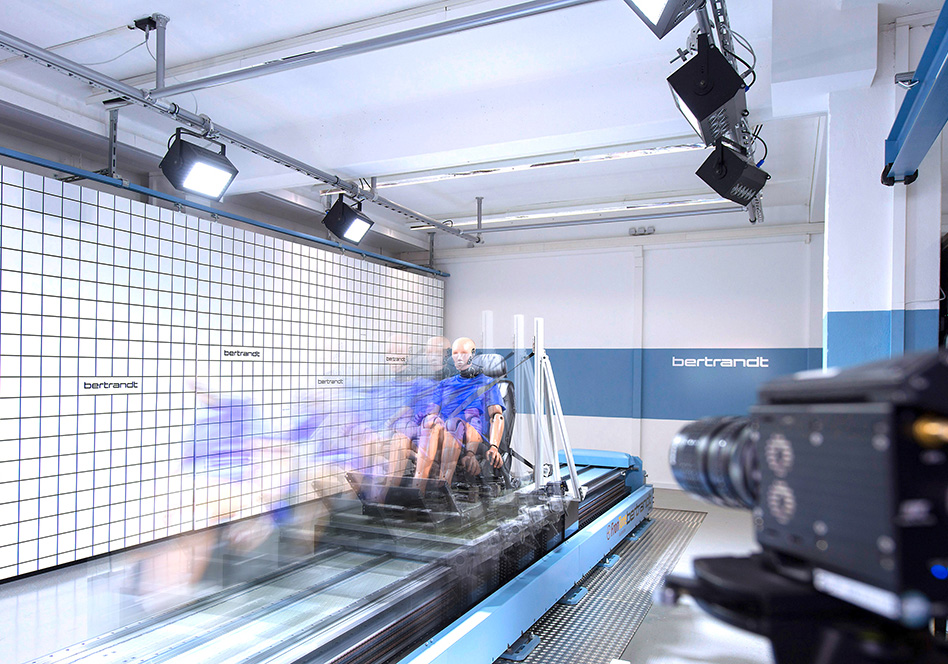
Dynamic safety test / Whiplash

With the help of our component sled system, we analyze the performance of components and assemblies by means of acceleration and deceleration pulses, especially for rear impact and whiplash tests on seats.


Pedestrian protection

In our partner and pedestrian protection test laboratories we offer head, hip and leg tests, test sensor systems and MisUse load cases. These tests can be performed under different temperatures.


Airbag Testing

With over 20 years of experience, we perform common airbag stance tests and energy absorption tests for head impacts dynamically and statically. Virtual test support with high-resolution 4K webcams is also available.

Browse through our services and order your tests directly online!

Acceleration resistance of accessories Without Test Standard

Test to determine the acceleration resistance of accessories in vehicles. This dynamic sled test aims to analyze the behavior of components under extreme acceleration and deceleration forces, such as those that can occur in a crash. The components to be tested are mounted on a sled and subjected to defined acceleration profiles that simulate real accident scenarios. The test examines various aspects such as component and material failure, unintentional opening of flaps or the behavior of release mechanisms under extreme loads.

Acceleration resistance of exterior components Without Test Standard

Dynamic sled test that analyzes the behavior of vehicle components under extreme acceleration and deceleration loads, such as those that can occur in a crash. The aim of the test is to evaluate the load-bearing capacity and functionality of exterior components under crash-like conditions. The following aspects are examined: Component and material failure under high acceleration forces, Unintentional opening of flaps or other movable elements as well as the function of release mechanisms under extreme loads

Acceleration resistance of interior components Without Test Standard

Dynamic sled test that analyzes the behavior of vehicle components under loads caused by acceleration or deceleration, as they occur in the event of a crash. The aim of the test is to evaluate the resilience and functionality of interior components. Aspects such as material or component failure, the unintentional opening of flaps or the function of release mechanisms are examined.

Airbag stability test knee Airbag Without Test Standard

Test to analyze the functionality and safety of the knee airbag under controlled conditions. The aim of this static airbag test is to examine the temporally correct and spatial deployment of the knee airbag, paying particular attention to the opening behavior and interaction with surrounding vehicle components. The airbag is deployed in a test environment that simulates the relevant footwell area of the vehicle. The test uses high-speed cameras and sensors to record the entire deployment process to ensure that the knee airbag opens quickly enough, takes on the correct shape and interacts effectively with the interior without damaging other components or jeopardizing the safety of the occupants.

Airbag stability test passenger airbag Without Test Standard

Test to analyze the functionality and safety of the front passenger airbag under controlled conditions. The aim of this static airbag test is to examine the temporally correct and spatial deployment of the airbag, paying particular attention to the opening behavior and the interaction with surrounding vehicle components. The airbag is deployed in a test environment that simulates the relevant vehicle structures. The test uses high-speed cameras and sensors to record the entire deployment process to ensure that the airbag opens quickly enough, takes on the correct shape and interacts effectively with the interior without damaging other components or jeopardizing the safety of the occupants.

Airbag static test for special shapes (far side, roof, etc.) Without Test Standard

Test to analyze the functionality and safety of airbags with special shapes such as far side or roof airbags under controlled conditions. The aim of this static airbag test is to examine the temporally correct and spatial deployment of these special airbag types, paying particular attention to the opening behavior and interaction with surrounding vehicle components. The airbags are deployed in a test environment that simulates the relevant vehicle areas. The test uses high-speed cameras and sensors to record the entire deployment process to ensure that the airbags open quickly enough, take the correct shape and interact effectively with the interior without damaging other components or jeopardizing the safety of the occupants

Airbag static test side airbag (thorax) Without Test Standard

Test to analyze the functionality and safety of the side airbag (thorax) under controlled conditions. This static airbag deployment test aims to examine the temporally correct and spatial deployment of the airbag, paying particular attention to the opening behavior and the interaction with surrounding vehicle components. The airbag is deployed in a test environment that simulates the relevant side area of the vehicle. The test uses high-speed cameras and sensors to capture the entire deployment process to ensure that the side airbag opens quickly enough, takes on the correct shape and interacts effectively with the interior without damaging other components or endangering the safety of the occupants.

Airbag test driver airbag Without Test Standard

Test to analyze the functionality and safety of the driver airbag under controlled conditions. The aim of this static airbag test is to examine the temporally correct and spatial deployment of the airbag, paying particular attention to the opening behavior and the interaction with surrounding vehicle components. The airbag is deployed in a test environment that simulates the relevant vehicle structures, in particular the steering wheel area. The test uses high-speed cameras and sensors to record the entire deployment process to ensure that the airbag opens quickly enough, takes on the correct shape and interacts effectively with the interior without damaging other components or endangering the driver's safety

Crash test: Data processing in ISO-MME format Without Test Standard

Testing for the collection and processing of crash test data in ISO-MME format, in which the measured values from various sensor systems are evaluated in a structured manner and prepared for further analysis. The aim is to create a consistent and standard-compliant database for evaluating the crash behavior of vehicles and components.

Crash test: High-speed recording Without Test Standard

Test to record the crash sequence using an additional high-speed camera in order to capture and evaluate the structural and kinetic behavior of the test specimen during the impact in detail.

Rear impact load - whiplash on front seats Euro NCAP

Test to evaluate the protective effect of vehicle seats and head restraints in the event of a minor rear-end collision. The test simulates the consequences of a rear-end collision at low speed on the vehicle occupants. In a dynamic sled test, an impact is simulated that corresponds to a rear-end collision at low speed. The load on a special dummy is measured, particularly in the area of the cervical spine. The test takes into account the geometry and adjustability of the head restraint as well as the dynamic behavior of the seat and head restraint during the impact. 

Rear impact load - whiplash on front seats UN-R17

Test to evaluate the protective effect of vehicle seats and head restraints in the event of a minor rear-end collision. The test simulates the consequences of a rear-end collision at low speed on the vehicle occupants. In a dynamic sled test, an impact is simulated that corresponds to a rear-end collision at low speed. The load on a special dummy is measured, particularly in the area of the cervical spine. The test takes into account the geometry and adjustability of the head restraint as well as the dynamic behavior of the seat and head restraint during the impact. 

Rear impact load - whiplash on front seats FMVSS 202a

Test to evaluate the protective effect of vehicle seats and head restraints in the event of a minor rear-end collision. The test simulates the consequences of a rear-end collision at low speed on the vehicle occupants. In a dynamic sled test, an impact is simulated that corresponds to a rear-end collision at low speed. The load on a special dummy is measured, particularly in the area of the cervical spine. The test takes into account the geometry and adjustability of the head restraint as well as the dynamic behavior of the seat and head restraint during the impact. 

Rear impact load - whiplash on front seats Korea NCAP

Test to evaluate the protective effect of vehicle seats and head restraints in the event of a minor rear-end collision. The test simulates the consequences of a rear-end collision at low speed on the vehicle occupants. In a dynamic sled test, an impact is simulated that corresponds to a rear-end collision at low speed. The load on a special dummy is measured, particularly in the area of the cervical spine. The test takes into account the geometry and adjustability of the head restraint as well as the dynamic behavior of the seat and head restraint during the impact. 

Rear impact load - whiplash on front seats Japan NCAP

Test to evaluate the protective effect of vehicle seats and head restraints in the event of a minor rear-end collision. The test simulates the consequences of a rear-end collision at low speed on the vehicle occupants. In a dynamic sled test, an impact is simulated that corresponds to a rear-end collision at low speed. The load on a special dummy is measured, particularly in the area of the cervical spine. The test takes into account the geometry and adjustability of the head restraint as well as the dynamic behavior of the seat and head restraint during the impact. 

Rear impact load - whiplash on front seats China NCAP

Test to evaluate the protective effect of vehicle seats and head restraints in the event of a minor rear-end collision. The test simulates the consequences of a rear-end collision at low speed on the vehicle occupants. In a dynamic sled test, an impact is simulated that corresponds to a rear-end collision at low speed. The load on a special dummy is measured, particularly in the area of the cervical spine. The test takes into account the geometry and adjustability of the head restraint as well as the dynamic behavior of the seat and head restraint during the impact. 

Rear impact load - whiplash on front seats IIWPG

Test to evaluate the protective effect of vehicle seats and head restraints in the event of a minor rear-end collision. The test simulates the consequences of a rear-end collision at low speed on the vehicle occupants. In a dynamic sled test, an impact is simulated that corresponds to a rear-end collision at low speed. The load on a special dummy is measured, particularly in the area of the cervical spine. The test takes into account the geometry and adjustability of the head restraint as well as the dynamic behavior of the seat and head restraint during the impact. 

Simultaneous airbag test (front passenger + knee airbag) Without Test Standard

Test to analyze the simultaneous functionality and safety of the front passenger and knee airbags under controlled conditions. The aim of this static airbag test is to examine the temporally correct and spatial deployment of both airbags simultaneously, with particular attention being paid to the opening behavior and interaction with surrounding vehicle components and between the airbags themselves. The airbags are deployed in a test environment that simulates the relevant passenger area of the vehicle. The test uses high-speed cameras and sensors to capture the entire deployment process to ensure that both airbags deploy quickly enough, take the correct shape and interact effectively with each other and the interior without damaging other components or endangering the safety of the occupants

Contact us

Do you have any questions? We will be happy to advise you personally:

To the contact form

Contact
Service not listed? Contact us!